Printing on the shortest notice anyone ever has
Of all the deadlines a print shop deals with, funeral printing is the one where the timeline is set by circumstances entirely outside anyone's control. A family often has two or three days between arrangements being confirmed and the service taking place, and within that window they are also handling everything else. The printing has to be right, and it has to be quick, and there is no second attempt.
This guide is written for families and for the people helping them. It covers what is usually needed, how to prepare the material quickly, and where the time actually goes, so that the printed part of the day takes up as little of your attention as possible.
What is usually printed
Order of service
The central item. It carries the structure of the service, the readings, the hymns or music, and the names of those taking part. Most are a folded booklet, commonly four, eight or twelve pages depending on content. It is also the item most people keep afterwards, which is worth remembering when choosing paper.
Memorial or thanksgiving cards
A small card with a photograph, the name, the dates and sometimes a short verse. Given out at the service or sent to those who could not attend. Small, quick to produce and often the item families are most glad they had.
Photograph displays
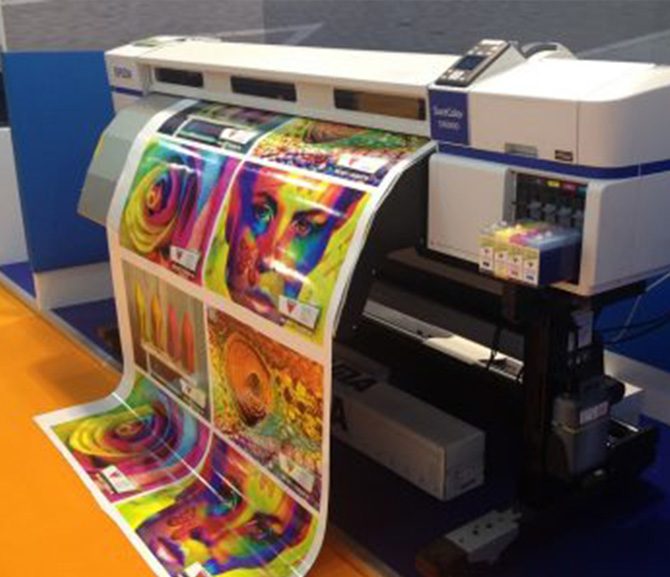
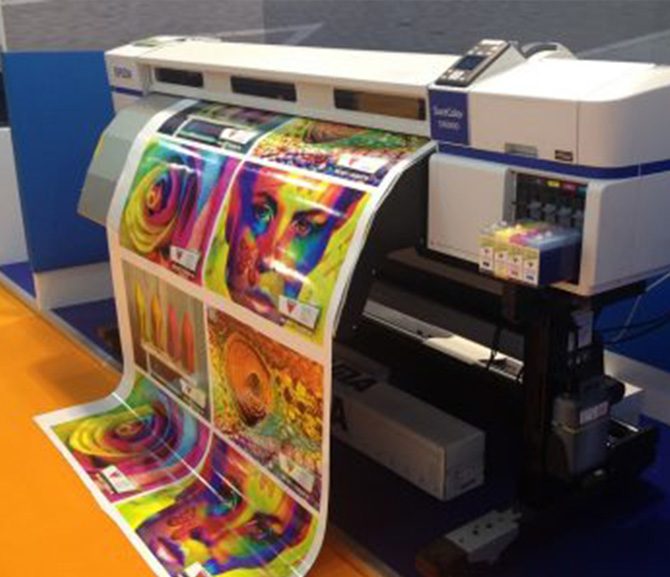
Mounted boards or framed enlargements for the venue, and increasingly a small collection of prints on a table. These need the most lead time of anything on this list, because large prints and mounting take longer than folded paper.
Attendance and condolence books
A printed cover or insert for a book where attendees sign. Simple, but needs to be ready on the day.
Notices and signage
Directions at a venue, a welcome sign, a notice about donations or a request regarding photography. Small items that make the day run more smoothly.
Thank-you cards
Produced after the service rather than before, which means they are the one item with no time pressure. Many families order them a week or two later.

Where the time actually goes
Very little of the delay is printing. In a typical short-notice job the time breaks down roughly like this: gathering photographs, agreeing the wording, laying it out, checking it, and then printing and finishing. The first three take far longer than the last.
The practical consequence is that anything you can settle early buys you real hours. If the wording of the service is confirmed and one good photograph has been chosen, a printer can usually work quickly. If the photograph is still being searched for on three different phones, no amount of press speed helps.
Preparing the photograph
This is the single most common source of delay and of disappointment, so it is worth a little attention.
- Send the original file, not a message copy. Photographs sent through messaging apps are heavily compressed and often too small to print well. Take the file from the phone's photo library or from the computer directly.
- Bigger is better. A file that looks fine on a phone may not hold at booklet cover size, and certainly not at display board size.
- Old prints can be scanned. A flatbed scan of a physical photograph at a high setting usually produces a better result than photographing it, though a careful photograph in daylight works if no scanner is available.
- Send more than one option. A designer can advise which will reproduce best, and having a second choice avoids a delay if the first is unusable.
- Say if it needs work. Small repairs to a damaged old photograph are often possible, but they take time and need to be raised at the start.
Getting the wording right
Errors in this material are painful in a way that ordinary print errors are not, so the checking matters even under pressure.
Check the spelling of every name against something written rather than from memory, including middle names and the names of anyone taking part in the service. Check dates carefully. Confirm the order of the service with whoever is leading it, since the sequence often changes late. And have someone outside the immediate family read it, because grief and proofreading do not work well together.
Agree one person who gives the final approval. Under time pressure, a document being amended by four people in parallel is how a wrong version gets printed.
Format and paper choices
| Item | Common choice | Why |
|---|---|---|
| Order of service | folded booklet, matte or silk stock | reads well, holds a photograph, keepsake quality |
| Memorial card | card stock, matte finish | durable, sits in a wallet or on a shelf |
| Display board | mounted print, matte surface | no reflections under venue lighting |
| Signage | card or foam board | stands up, quick to produce |
| Thank-you cards | folded card with envelope | written by hand afterwards |
A matte or silk surface is generally preferred over high gloss for this material. It photographs better, it does not reflect venue lighting, and it can be written on. For display boards in particular, gloss under bright lights makes a photograph hard to see from an angle.

Quantity
Order more than the expected attendance. Funerals are frequently better attended than families anticipate, and running out during the service is distressing in a way that a few spare copies never are. A common approach is to add a comfortable margin over the expected number and to keep several aside deliberately for family members and for those who could not attend.
Extras also matter afterwards. People ask for a copy weeks later, and a reprint of a small quantity costs far more per copy than including them at the start.
Working to the deadline
- Say the date and time of the service immediately. Everything is planned backwards from it, and a printer needs it in the first sentence.
- Confirm collection or delivery. Whether the material goes to a home, a funeral director or straight to the venue changes the timeline. Delivery considerations are covered in urgent print delivery.
- Ask about cut-off times. Same-day and next-day work has a point in the day after which it is no longer possible, explained in same-day printing cut-off times.
- Separate the urgent from the rest. Order of service and cards first; display boards and thank-you cards can follow if time is short.
- Approve once, clearly. One person, one approval, in writing.
Some items simply cannot be compressed beyond a point, and knowing which in advance prevents planning around something impossible. That is set out in what cannot be rushed, and the wider checklist for a tight deadline in same-day printing checklist.
Designing the order of service so it works on the day
A few small layout decisions make the booklet easier to use for people who are upset and may not have reading glasses with them.
Set the type larger than looks necessary on screen. Hymn and reading text in particular is followed under poor lighting by people of all ages, and generous type costs nothing but a page. Keep the sequence on the page in exactly the order it happens, without decorative elements interrupting the flow, so that anyone can glance down and see where they are.
Avoid splitting a hymn or a reading across a page turn where you can. If it cannot be avoided, break at a natural point rather than mid-verse. Keep the paper matte so it does not rustle loudly or reflect, and choose a weight substantial enough that the booklet holds its shape when held in one hand.
On the cover, a single clear photograph with the name and the dates is almost always better than a busy layout. This is the page people look at longest, and simplicity carries the weight better than decoration does.
If the funeral director is handling it
Many funeral directors arrange printing as part of their service, which removes a task at a difficult time. It is still worth asking two questions: whether you can see a proof before it prints, and whether you can supply your own photograph file rather than a copy taken from a phone message. Both make a noticeable difference to the finished result, and both are usually straightforward to arrange.
If you would prefer to arrange the printing yourself, tell the funeral director early so the two are not duplicated.
How we handle this work
We treat funeral printing as a priority job and we keep the process as simple as possible. Send us the date of the service first, then the wording and the photograph, and we will tell you plainly what is achievable in the time and what would need to be dropped or simplified. We send a proof for checking on every job, however short the notice, because a name spelled wrongly cannot be undone.
If you would like a photograph assessed before you commit to a size, send it and we will tell you honestly whether it will hold. You can see the options under digital printing and across general printing services. Reach us through the contact page, and there is more about us on the about page.
The short version
Give the date and time of the service first, because everything is planned backwards from it. Settle the wording and choose a photograph early, since those take longer than the printing does. Send original photograph files rather than copies from a messaging app, and offer more than one option. Check every name against something written and have one person give the final approval. Choose matte or silk surfaces over gloss. Order comfortably more than you expect to need. And deal with the order of service and cards first, leaving display boards and thank-you cards to follow if time is short.